Once upon a time, Volkswagen's GTI was a hopped-up Golf.
The Golf (also called the Rabbit for a while) was the mass-market model; the GTI the performance model — similar to the way there's a Mustang and also a Mustang GT.
Both the Golf and the GTI were once pretty inexpensive too.
Now there's just the GTI, VW having canceled the Golf (in the United States) back in 2021.
Like the Mustang (and not just the GT), the GTI has become something closer to an exotic performance car on account of its price — which can be as high as almost $43,000 for a top-of-the-line Autobahn iteration.
It's also automatic only now, whereas the original GTI came only with a manual transmission.
Times have changed. Whether for the better is a matter of opinion.
What It Is
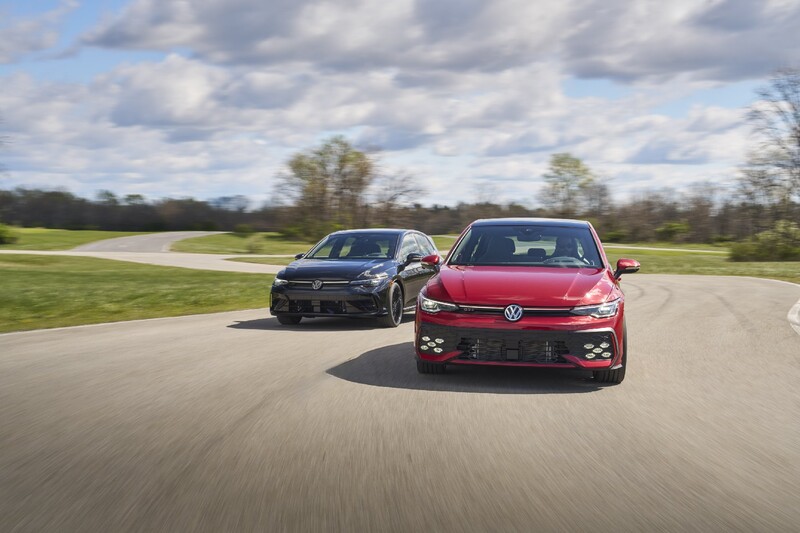
The GTI is a small (compact) high-performance five-door hatchback based on the VW Golf. VW used to sell a three-door version as well as a manual transmission, but those are no longer available.
All 2026 GTIs are automatic only and come only with five doors.
You still have your choice of three trims.
The base S trim lists for $34,590, and it comes standard with paddle shifters, a heated steering wheel, 18-inch wheels, heated, cloth-covered front seats and VW's Digital Cockpit, which bundles a 10-inch LCD main gauge cluster with a 12.9-inch secondary touch screen for the infotainment system.
The mid-trim SE ($39,080) gets an upgraded nine-speaker stereo, panorama sunroof and VW's ArtVelours synthetic suede seat covers.
At the pinnacle is the Autobahn ($42,480), which centers on a 19-inch wheel package with summer tires and an adaptive suspension system. These trims also get heated rear seats and an automated self-parking system, among other upgrades.
What's New for 2026
There are no major changes for the new model year. The current GTI is basically the same as the 2022 model — except for the fact that you could still get a manual transmission back then.
What's Good
— Still fun to drive.
— Though small, the boxy shape (and extra doors) allows for a surprisingly roomy interior — for a performance car — as well as more room for cargo than you might expect.
— Very good gas mileage (32 mpg on the highway) given that it's a performance car.
What's Not So Good
— Without a manual, it's not as fun as it used to be.
— Not everyone needs — or wants — the extra doors.
— Performance has gotten pricey.
Under the Hood
Every GTI trim comes with the same drivetrain, which consists of a 2.0-liter turbocharged four-cylinder engine, paired with a seven-speed automatic and front-wheel drive. The engine touts 241 horsepower. That's more than twice the power that the original GTI of the late '70s offered.
The new GTI also gets to 60 mph nearly twice as quickly. It took the original about nine seconds to make that run; the new car can do it in about 5.2 seconds. That's a measure of 40 years of GTI evolution.
There's also another measure.
The new car is automatic only, which is a strange thing to discover at first glance since cars like the GTI are enthusiast cars, and enthusiasts enjoy the fun of driving cars — sporty cars, especially — that have manual transmissions. As mentioned earlier, the original GTI was manual only, precisely because VW knew that the type of person interested in a car like that probably doesn't want an automatic.
So, why is the current GTI automatic only?
VW will say it's because the seven-speed automatic can be programmed to out-shift a human driver; that it is faster and more accurate than a human driver. Absolutely true. Modern automatics are not the "slush boxes" of 40 years ago. Many have what amount to learning algorithms that adjust shift timing in response to the driver's pace; all modern automatics have driver selectable modes that allow the driver to tailor shift firmness and timing. Most also offer a degree of manual control over the shifting too — as via the GTI's standard paddle shifters.
By the numbers, the automatic is superior. The car will generally get to 60 mph most quickly if it has an automatic and also give you the best lap times too.
But something is lost along the way. There is a reason why manual-equipped sporty/performance cars are always regarded as more desirable than automatic-equipped cars.
So, again, why? More finely, why would VW (and it is not just VW) take away a feature that buyers of this particular type of car want?
Because compliance.
Because an automatic can be programmed — to optimize the drivetrain's compliance performance on emissions certification and miles-per-gallon tests. A manual is a variable that cannot be programmed, and that is a problem for vehicle manufacturers as regards compliance.
Hence the automatics, even in performance cars like the GTI.
On the Road
VW has an easier time of it now because the GTI has fewer rivals now. Ford stopped making the Focus ST years ago, and other than the Mazda3, there aren't many other "hot hatches" left, except for the substantially more expensive Toyota Corolla GR ($39,920 to start). The Mazda3 is also automatic only — at least, if you want the GTI-equivalent turbocharged engine that's optional in the Mazda3.
The GTI accelerates with authority — zero to 60 mph comes up in about 5.6 seconds — and the now-standard seven-speed dual-clutch manual shifts gears quickly and with snap. But there is also some lag, an inevitability with an electronically controlled automatic because it takes a split second for the computer to register that you just floored the accelerator and then to command the transmission to downshift. In a manual-equipped car, the driver can shift down in tandem with the flooring of the accelerator pedal and also in anticipation of doing that. The automatic-equipped car may still be quicker — by the stopwatch — but the manual-equipped car feels quicker.
It was — arguably — more fun.
There is just less to do in an automatic-equipped car, and while that is a good thing in a vehicle bought to serve as transportation, a performance car is about more than just transportation. People who buy cars like the GTI want more things to do, in terms of actually driving the car. It is the engagement (literally as well as figuratively) that makes the emotional connection. This has been lost by focusing on the "numbers" — which are easier to deal with because they are quantifiable. Feelings are not — but they are as or more important in a performance car.
The GTI does provide other enjoyable intangibles, such as the almost cat-free-sounding exhaust note and the very quick and very sharp steering response. The handling is brilliant — not just because of the G-force capability but because it feels right. This is hard to articulate; it is a thing that has to be felt as you heel the car over in a corner and then punch it as you come out, exhaust booming as you do.
It also doesn't feel flimsy, probably because it isn't.
This GTI weighs about 3,183 pounds. The original GTI weighed about 1,000 pounds less. That lightness had its virtues, including a feeling of sprightliness. But this VW imparts a feeling of gravitas, without feeling overweight in the process.
Excellent gas mileage is a tangible plus.
If you drive it as if it were just a Golf, you can exceed the posted 32 mpg on the highway. That's very close to what you'd get if you were driving a Golf (if VW still sold them here) but in a Golf that can become a GTI whenever your whim and right foot wants it to be.
The only hair in the soup is the big LCD touch screen that you must use to control certain functions. This sort of interface is not a functional improvement over knobs and buttons and switches; just try tapping/swiping/scrolling while the car is moving. When you do try, the system — which is tied in with a distracted driver monitor that uses a camera to watch you're looking at — will temporarily "pause" your ability to tap/swipe scroll, in the interests of "safety."
Of course, it'd be much safer if you could just reach over — without looking — and turn a knob to control/adjust what you want to control/adjust.
At the Curb
As mentioned, the current GTI comes in just the one body style — the five-door hatchback. This is certainly the most practical way to go, as neither the driver nor the front-seat passenger has to get out so that someone can get in — or out — of the backseat area. But the three-door hatch (like the manual transmission) has a sportier vibe and is probably preferable to people who only carry backseat passengers occasionally.
On the other hand, VW doesn't have to worry — much — about the three-door competition, because there basically isn't any, excepting the much pricier Corolla GR (which is also smaller and less practical).
For a small car — the GTI is only 168.9 inches long — there is ample room inside for backseat passengers and cargo. The hatchback layout is what makes this possible. As a point of comparison, the Hyundai Elantra N — which is a sedan — only has 14.2 cubic feet of cargo space in its trunk. The VW has 19.9 cubic feet behind the rear seats, and with those seats folded down, the available space opens up to 34.5 cubic feet. The Elantra N is a fun car — especially because it does come standard with a manual transmission — but its small trunk greatly limits its feasibility as something other than a fun car.
The GTI can be an everyday car — and even a family car, until the kids hit their teens, at least.
As mentioned, all trims come with the big LCD "digital cockpit" main gauge cluster as well as the big secondary LCD touch screen. This is a thing that used to be a top option in the Autobahn trims (as well as the GTI's higher-performance stablemate, the Golf R, which is also automatic only but comes with 328 horsepower and standard all-wheel drive). Some like this type of interface; others hate it.
The SE (one up from the base S) adds amenities you may want such as the big panorama sunroof, but if you want functional enhancements, the Autobahn will get you the adaptive suspension, which adapts the ride quality to the road as well as your driving — as opposed to be being fairly firm all the time. If you live in an area with crappy roads, it's an upgrade you may find worth the extra cost.
The Rest
Other than the take-it-or-leave-it automatic, the GTI's other problem - insofar as its appeal to the type of person who likes cars like this — is its price. It is relatively inexpensive — relative to the $50,000-plus average price paid for a new vehicle. But it is also relatively expensive relative to what GTIs once sold for, which was $8,350 back in 1984. Yes, inflation — and yes, nicer now. But even as recently as four years ago, the same basic car as the current car stickered for under $30,000 to start — and with a manual transmission standard.
The GTI is drifting toward what the Golf R used to be, while the Golf R — now a $50,000 car — has become a near-exotic car.
The Bottom Line
It's still fun — just not as fun (or as inexpensively fun) as it used to be.
Eric's latest book, "Doomed: Good Cars Gone Wrong!" will be available soon. To find out more about Eric and read his past columns, please visit the Creators Syndicate webpage at www.creators.com.
View the VW GTI this week.







View Comments